Non-Surgical/ Med Spa

Body

Breast

Face

Male

Hand/Reconstruction
Category Archives: Hand Reconstruction
The Factors Behind Aging Are . . .
- Tuesday, 15 May 2018 05:53
- Dr. Robert M. Kimmel
- 0 Comments

 It’s safe to say that we’ve reached an understanding with the process of aging. We know we cannot stop it, and also know that we don’t have to accept every aspect of aging as “the norm.” The prevalence of cosmetic procedures is evidence of our willingness to take aging by the horns. From our two offices, we are proud to serve patients from Philadelphia, Scranton, Allentown, and Harrisburg with options to resolve cosmetic concerns. Additionally, we believe in supporting each individual’s right to age gracefully with pertinent information. Here, we point out the factors that may cause aging to occur sooner and faster than we’d like.
Knowing Your Hand
In a card game, you win by knowing your hand and how to use it to your advantage. Knowing the cards, or factors, that can age the skin prematurely, enables you to offset this risk accordingly. There are several factors to aging, most of which can be controlled. These include:
- UV damage. The fact that UV light from sunshine is ever-present doesn’t mean that you have to agree to UV damage. The truth is that UV damage is largely within your control. It is ideal to get an early start with sun protection using broad spectrum sunscreen because the damage that occurs beneath the surface can take years to become evident. Regardless of your current age, now is a great time to see us for treatment to offset sun damage.
- Poor quality sleep. Did you know that growth hormones are produced during the deep states of sleep? These growth hormones are relevant to tissue regeneration and cellular turnover. Therefore, a lack of sleep can do a doozy on your skin. Give your body every chance it needs to repair DNA damage and rejuvenate itself by getting the rest it tells you it needs. For some people, that’s six hours a night; for others, its nine. Listen to your needs and you’re taking strides toward more graceful aging.
- Too much alcohol. We’re learning much more about the positive and negative effects of alcohol consumption lately. On one hand, beverages like red wine offer certain benefits to health and longevity. On the other hand, red wine and other alcoholic beverages have a diuretic effect. That means that drinking can dehydrate the body and deplete the skin of the moisture that keeps is soft and supple.
We may not be able to control all of the factors of aging, but we can treat concerns safely and efficiently. To explore how we can help you refresh your look, call our Pottsville or Hazleton office.
Your Hands – Are They Revealing Your Age?
- Sunday, 30 October 2016 03:51
- Dr. Robert M. Kimmel
- 0 Comments
 It seems that most anti-aging cosmetic procedures focus on the face…the fine lines, wrinkles, dry skin, acne, blotches, and those aging-revealing sun spots. Putting your best face forward is one of the things we are best at helping you do and we offer many amazing procedures and treatments to that end. But you may be surprised to learn that your hands can actually betray your age as well.
At, Keystone Cosmetic Surgery, we regularly advise our clients to not only care for their facial skin but to take the time to care for their hands – because sometimes no matter what you do to make your overall appearance look younger, your hands can and often do, give away your age.
Continue reading to learn 5 tips for caring for your hands:
- Be diligent and don’t skip on hand-cream, lotion or moisturizer. While your hands won’t reveal the obvious signs of aging until you’re in your 40s, using a good hand-cream as early as your 20s will work to your advantage later in life.
- Be diligent and generous with sunscreen. If possible, choose a hand-cream or moisturizer with added sunscreen. Exposure to the sun’s UV and UVB rays is the main culprit when it comes to sun spots, and the premature appearance of wrinkles, not only on your face but on your hands as well.
- Wear rubber gloves when washing dishes or when you have your hands in water. The chemicals in cleaning products can wreak havoc on your hands.
- If your skin is extra sensitive, avoid harsh products which can contribute to making your hands dry and flaky.
- And last, but not least, consider making an appointment with us for a hand rejuvenation procedure such as a chemical peel or laser skin resurfacing.
Let us be your go-to cosmetic procedure center if you are noticing the obvious signs of aging in your hands. We invite you to call and schedule an appointment. We look forward to meeting you.
WHATS THE GIST OF GANGLION CYSTS?
- Tuesday, 15 September 2015 06:49
- Dr. Robert M. Kimmel
- 0 Comments
Ganglion Cysts…definitely scary sounding…but not to fear!
Ganglion cysts are very common and are easily treatable.
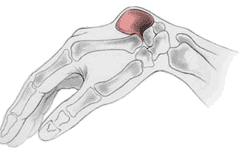 What are they?
• Ganglion cysts are lumps within the hand or wrist.
• They are usually located next to a joint or a tendon.
• The most common locations are the base of the finger, the top of the end joint of the finger, the palm side of the wrist and the top of the wrist.
• Inside the cyst is a clear, thick, jelly-like material.
• The cyst may feel firm or spongy, depending on its size.
• Ganglion cysts are more common in women.
• The majority occur in people between the ages of 20-40.
The cause of ganglion cysts is a mystery but it is theorized that:
• Trauma may cause the tissue of the joint to break down forming small cysts which then join to form a larger cyst, or
• A flaw in the joint capsule or tendon covering allows the joint tissue to bulge.
It is difficult to know how to prevent ganglion cysts, however early evaluation and treatment are recommended.
• Ganglion cysts may change size or disappear completely.
• They may or may not be painful.
• Many are without symptoms except for their appearance.
• If they are painful, however, the pain is usually a nonstop aching which is made worse by movement of the joint.
• They are not cancerous and will not spread to other areas of the body.
• If the cyst is connected to a tendon, there may be a feeling of weakness in the affected finger.
What to do?
• Treatment is often non-surgical.
• The cyst can simply be observed, especially if it is painless.
• If the cyst becomes painful or limits activity, there are treatment options available:
• Anti-inflammatory medication may be prescribed for pain.
• An aspiration may be performed to remove the fluid from the cyst.
• This requires placing a needle into the cyst.
• Aspiration is a simple procedure but recurrence of the cyst is common.
• Surgical alternatives are available which are generally successful.
Dr. Kimmel specializes in the treatment of ganglion cysts. Call for a consultation today!
IT’S ALL IN THE WRISTS!
- Saturday, 15 August 2015 05:46
- Dr. Robert M. Kimmel
- 0 Comments
Ask anyone who spends the majority of their work day typing at a computer. Whether they are writing the Great American Novel or drafting intricate legal briefs, their wrists take the brunt of the workload – sometimes resulting in the debilitating pain, tingling and numbness of carpal tunnel syndrome.
Typing is not the only culprit. Knitters, artists, long-haul drivers, wood workers, anyone who works with small instruments or vibrating equipment has an increased risk for carpal tunnel syndrome – especially if there is a pre-existing pain or weakness in their wrists.
 There are no proven strategies to prevent carpal tunnel syndrome, but here are a few things to consider to help minimize the stress on your hands and wrists:
• Stay at a healthy weight and try to control other conditions such as arthritis and diabetes; avoid smoking.
• Think about your daily routine and evaluate it for activities that increase your risk.
• Try to arrange your activity and work space using ergonomic guidelines – set up an ergonomic, body-friendly workstation which includes the placement of your desk and computer monitor, the choice of a comfortable chair and the use of a specially designed wrist-rest near your keyboard.
• Efficient, proper body mechanics are one of the keys to preventing carpal tunnel syndrome.
• Check your posture. Sit up straight! If you don’t, your shoulders tend to roll forward causing your neck and shoulder muscles to shorten, compressing nerves in your neck. This can affect your wrists, fingers and hands.
• Relax your grip! Most of us use more force than needed to perform even everyday tasks.
• Take a break…frequently! Get up from your chair, do something else, rest, stretch, change positions, shake, bend or stretch your hands and fingers often.
• Keep your hands warm. Fingerless mitts that allow movement of the fingers while warming the hands and wrists are popular…try a pair…especially if you are unable to control the temperature of your work environment!
If you think you may have carpal tunnel syndrome, call Dr. Kimmel for a consultation.
What You Need to Know About Ganglion Cysts
- Saturday, 30 May 2015 08:04
- Admin
- 0 Comments
 Ganglion cysts are extremely common, but unfamiliar to many of our patients. They occur when fluid builds-up under the surface of the skin and are commonly found around joints such as the wrist, feet, knees and ankles.
Only your physician can accurately diagnose the presence of a ganglion cyst, however common identifying factors include a firm texture and round shape. You may also experience some mild joint pain around the cyst and even numbness. The cyst will be flesh toned and should not present as an open sore. If you are concerned about a cyst on your body you should schedule an appointment for a diagnosis today.
If it is determined that you have a ganglion cyst, it can be treated in a variety of ways. It can be drained, injected with steroids or surgically removed. Don’t live with discomfort or self-consciousness due to the presence of ganglion cysts.
Contact our office for more information and treatment options today.
Hand Reconstructive Surgery in Pennsylvania
- Friday, 07 March 2014 14:53
- Dr. Robert M. Kimmel
- 0 Comments
When one is considering hand reconstructive surgery, it is usually due to a trauma/injury. Having this type of reconstructive surgery varies greatly from the ‘cosmetic’ side of reconstructive surgery, since the goal is typically to return functionality rather than addressing appearance.
With the right surgeon, you can obtain the best of both worlds and get as much use and cosmetic appearance back as possible. At Keystone Surgery Center in Pennsylvania, we have extensive experience in hand reconstructive surgery.
Finding the right doctor for hand reconstruction is imperative since the procedure can involve tiny micro surgeries done on the joints, nerves, tendons, and the outer skin. You want to be sure that you fully discuss with your doctor the expectations and realities of the surgery.
Your specific case may involve one surgery, or it may involve multiple procedures. This all depends on the extent of your injuries or deformities, as well as your doctor. A great surgeon will be able to do the work in as few surgeries as safely possible.
In cases of congenital deformities such as fingers being fused together, you can’t afford to choose an inexperienced surgeon — improper surgical techniques can lead to nerve damage or worse. You can see examples of the great results our patients have experienced by browsing the ‘Before and after’ galleries on our website. If you see a case similar to yours, come in and discuss it with us. If not, a quick search online will help you find a result you would like that you can bring in.
Whatever reason you need to undergo hand reconstructive surgery, we will give you the best in experience, expertise, and technological advances in the Pennsylvania area.