Non-Surgical/ Med Spa
Body

Breast
Face
Male
Hand/Reconstruction
Category Archives: Laser Treatments
Getting Laser Resurfacing? You Want to Know This!
- Wednesday, 15 January 2020 00:06
- Dr. Robert M. Kimmel
- 0 Comments
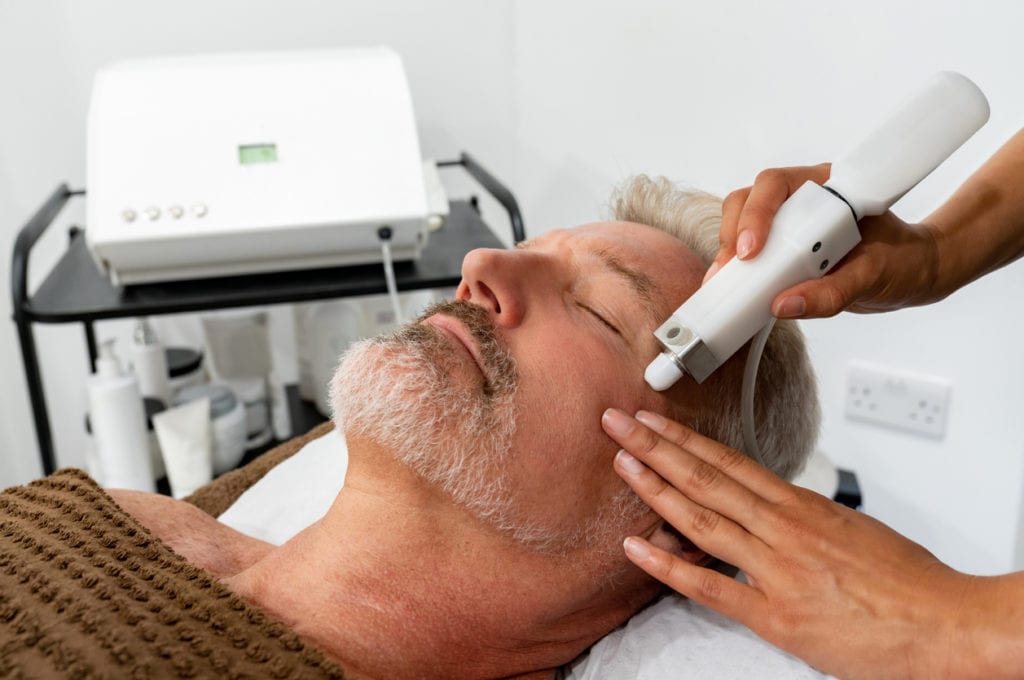
The appearance of the skin changes as we age; most people realize this. What we don’t often see is just how many factors influence the skin. Our genetics play some part in how we age, but there is much more contribution made by our lifestyle habits and how much time we spend in the sun without sunscreen. Even our facial expressions affect the elasticity and firmness of tissue. Those who know the skin needs help often look for it in the form of products. This is a good start that should be a part of a bigger plan that includes laser skin resurfacing.
Laser skin resurfacing delivers controlled energy into the skin to remove the uppermost layer of cells. These cells no longer provide value to appearance and are just stuck in place. The dead and damaged cells that sit on the epidermis dull the complexion and make it much more difficult for skincare products to achieve their intended effects. These cells need to go, and laser is a great method of removing them.
What About After Laser Treatment?
It isn’t enough to undergo a single treatment and expect the skin to age more gracefully. After you have laser skin resurfacing, we recommend that you:
- Protect your skin daily with sunscreen. Whether it is contained in your moisturizer or you apply sunscreen separately, make sure you use a broad-spectrum product with an SPF of 30. This is not a seasonal practice, either. Harmful UV rays beam right through a thick cloud layer, too.
- Feed your skin. What you eat matters to your skin. Foods that are rich in antioxidants, such as leafy greens, are excellent supporters for healthy skin.
- Stay hydrated. The body needs adequate hydration to function well and to flush toxins and debris out. Without sufficient hydration, small amounts of toxins can build up, creating problems for the skin.
- Stick to a program. Don’t just wash your face, create a skincare program that will keep the nutrients coming. After cleansing, the skin needs hydrating or reparative serums and moisturizer. Oh, and sunscreen. We can’t advise this enough.
Give your skin a leg up on the aging process. Call our Hazleton or Pottsville office to learn more about laser resurfacing.
Triniti™ Brings the Power of Three to Your Skin
- Sunday, 15 October 2017 01:20
- Dr. Robert M. Kimmel
- 0 Comments

 Serving the men and women of areas in and around Philadelphia, Allentown, and several other communities bring us a great deal of joy. One of our top priorities is to meet expectations and preferences. To achieve this, we have selected some non-surgical anti-aging treatments to complement our cosmetic surgery services. One such treatment is the Triniti™ light and laser skin rejuvenation platform.
Triniti™ is a multidimensional treatment that utilizes three powerful modalities: radiofrequency, intense pulsed-light, and laser. By combining the three, it becomes possible to treat a wider range of concerns, including skin laxity, wrinkles, and hyperpigmentation or sun damage.
What to Expect
During Treatment:
Triniti™ treatment is conducted in an office visit lasting approximately one hour. After cleansing the skin and applying topical gel to assist in the fluid movement of the handpiece, we begin treating discoloration and UV damage with the RF FotoFacial aspect of the process. Refirme skin tightening follows, reaching deeper beneath the surface to promote collagen reformation for firmer, younger-looking skin. Finally, Infrared fractional laser treatment is performed to continue the stimulation of collagen remodeling. Triniti™ treatment is not uncomfortable for most patients. Slight warmth and pinching or “zapping” may be experienced.
After Treatment:
One of the numerous beneficial aspects of Triniti™ is that the recovery period after each of the three necessary treatments is relatively uneventful. Normal activities can be resumed immediately, with an eye for sun protection. Broad spectrum sunscreen should be used every day, and tanning of any kind (tanning beds included) should be avoided for at least 4 weeks after the series of treatments have been completed. If the skin is exposed to ultraviolet light through sunshine or tanning lamps, there is a risk of permanent darkening. Furthermore, ultraviolet light breaks down collagen, so inevitably minimizes the long-term results from treatment.
Over the first several days after Triniti™ treatment, areas of darkened skin may appear. Minor peeling or flaking may also be noticed. These are both temporary and indicate the turnover of skin cells to reveal healthier, more youthful skin.
Learn more about our non-surgical beauty treatments by calling our Hazelton or Pottsville office.
What You Always Wanted To Know About Stretch Marks
- Thursday, 30 June 2016 02:07
- Dr. Robert M. Kimmel
- 0 Comments

 Stretch marks. Blah. Definitely a summer downer. If you have them, take heart, you are not alone. But you may not know much about them.
Stretch marks appear because of the force of stretching upon your skin. They are a form of scarring that is usually associated with rapid weight gain, such as during pregnancy. They may also occur as a result of rapid growth during puberty or muscle building and weight lifting. Stretch marks can be found anywhere on your body, but they’re most common on your stomach, breasts, upper arms, thighs, and buttocks. Stretch marks aren’t dangerous, and they often disappear over time, but they are unsightly.
The severity of stretch marks is affected by several factors, including your genetic history, the degree of stress on your skin and your cortisone level. Cortisone is a hormone produced by your adrenal glands; it weakens the elastic fibers in your skin.
Stretch marks typically appear as parallel lines on your skin. They are of a different texture and color than your normal skin – ranging from almost a transparent, silvery light grey to bright pink to purple. Stretch marks don’t all look alike, and may vary depending on how long you’ve had them, what caused them, where they are on your body, and the type of skin you have. When you touch stretch marks, you might feel a slight ridge or indentation on your skin. Occasionally, stretch marks feel painful or they may itch. Your likelihood of getting stretch marks may be increased by:
- Being overweight
- Your family history
- Undergoing breast enhancement surgery
- Pregnancy
- Rapid weight gain
- Using a corticosteroid medication
- Having Cushing’s syndrome, Marfan syndrome or certain other genetic disorders
There is help for stretch marks…they can be effectively treated with laser treatments and micro-needling. If you would like to know more about treating your stretch marks, call to schedule a consultation appointment, today. Summer is here…it’s the perfect time to beautify your body!